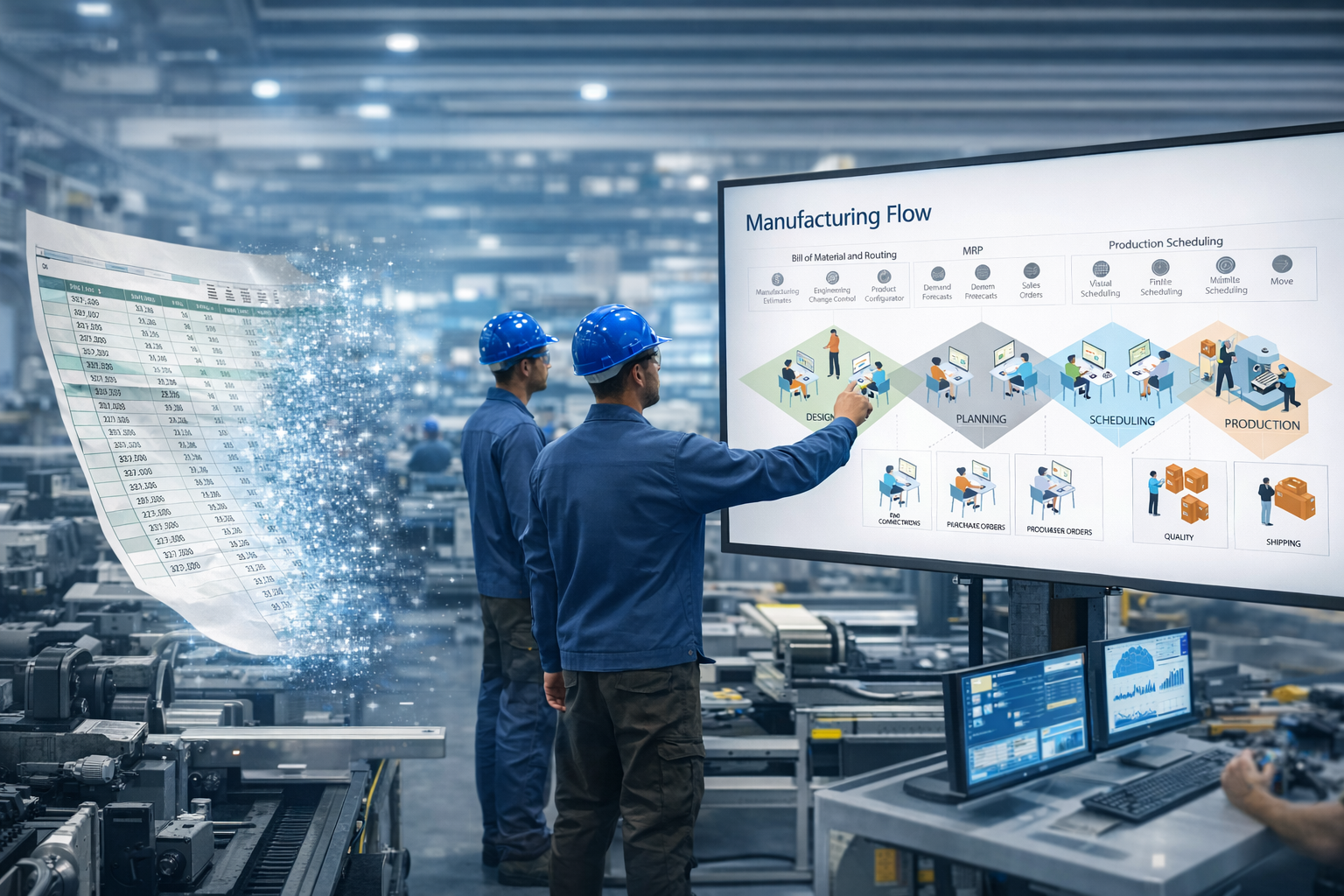
For manufacturing operations and plant leadership teams, the shop floor is where profitability is ultimately decided. Upgrading to a modern system is not just an IT project; it is a fundamental shift in business process optimization. Professional ERP implementation services transform the shop floor by eliminating disconnected spreadsheets and replacing them with real-time production visibility, precise planning accuracy, and automated inventory control. The result is a proactive, data-driven manufacturing environment.
The Reality of Disconnected Manufacturing Operations
Before an ERP integration, plant managers typically rely on fragmented systems. Production schedules live on whiteboards, inventory counts are tracked in outdated spreadsheets, and quality control data is siloed. This leads to costly blind spots. When an urgent customer order arrives, leadership cannot immediately verify if the raw materials are available or if machine capacity allows for the run. Operational efficiency suffers because teams spend their time chasing information rather than executing production.
3 Ways ERP Implementation Services Transform the Shop Floor
1. Delivering Real-Time Production Visibility
The most immediate change plant leadership notices after a successful deployment is absolute clarity. Modern systems, like Acumatica Cloud ERP, connect the front office directly to the shop floor. Operators log material usage, scrap rates, and labor time via mobile devices or shop floor terminals the exact moment they occur.
If a machine goes down or a batch fails a quality check, production management is alerted instantly. This real-time visibility allows leadership to pivot quickly, reallocate resources, and keep production moving without waiting for end-of-shift reports.
2. Upgrading Planning Accuracy and Scheduling
A manufacturing business lives and dies by its schedule. Relying on manual planning often results in bottlenecks, idle workstations, and missed delivery dates.
Expert
ERP implementation services configure advanced planning and scheduling modules to factor in all real-world constraints: machine availability, labor skills, tooling, and material lead times. When a sales order is entered, the ERP calculates the exact material requirements and automatically schedules the production run for maximum efficiency. This level of planning accuracy prevents overbooking and ensures continuous, optimized workflows.
3. Establishing Precision Inventory Control
Material shortages halt production, while excess inventory ties up critical cash flow. Without an integrated system, managing this balance is largely guesswork.
Through seamless ERP integration, inventory levels are dynamically linked to the production schedule and purchasing. As materials are consumed on the shop floor, the system automatically deducts them from inventory. When stock reaches a predefined minimum, purchasing is automatically alerted to reorder. This automated inventory control eliminates the risk of stockouts and reduces the carrying costs of excess raw materials, directly improving the bottom line.
Why the Right Partner Matters for Operational Efficiency
Buying the software is only the first step. Translating a powerful software platform into actual business process optimization requires a partner who understands manufacturing workflows. Generic IT setups often fail to capture the nuances of discrete or process production.
Partnering with an experienced team ensures that the system is mapped precisely to your plant’s unique requirements. This practical approach minimizes disruption during deployment, accelerates user adoption, and ensures your investment yields immediate improvements on the floor.
Take Control of Your Shop Floor
If your plant leadership team is ready to move past manual bottlenecks and embrace true production control, it is time to look at a cloud-based solution tailored specifically for manufacturers.

 Aqurus Solutions
 Murray Quibell : Mar 25, 2026, 12:47:34 PM